

How to Leverage Customer Content for Brand Engagement: A Step-by-Step Marketing Guide
Customer engagement marketing transforms passive audiences into active brand advocates by systematically capturing, curating, and amplifying authentic content created by your customers. The method centers on building reciprocal relationships where customers contribute photos, reviews, testimonials, and social posts that you repurpose across marketing channels, typically reducing content production costs by 40 to 60 percent while increasing conversion rates through social proof.
This approach works because modern buyers trust peer recommendations over branded messaging. When potential customers see real people using and endorsing your products, purchase intent climbs. The shift requires moving beyond traditional broadcast marketing to create feedback loops where customer voices shape your narrative.
The process involves five core stages: establishing legal frameworks for content rights, identifying and activating your most engaged customers, implementing collection systems, moderating submissions for brand alignment, and distributing approved content strategically. Each stage demands attention to compliance, particularly around consent and attribution, making user-generated content campaigns as much about operational discipline as creative vision.
Yet most organizations stumble at implementation. They either fail to secure proper usage rights, curate content that feels forced rather than authentic, or measure vanity metrics instead of business impact. The distinction between successful and struggling programs comes down to treating customer content as a strategic asset requiring the same rigor as any owned media channel.
What follows is a practical framework for building compliant, measurable customer engagement programs in 2026, including the tools that streamline collection, the legal guardrails that protect both parties, and the verification methods that prove ROI to skeptical executives.
Understanding Customer Content: Types and Value
Customer content, often called user-generated content or UGC, refers to any material created and shared by your customers rather than your brand. This encompasses a wide spectrum of formats:
- Written reviews and ratings on e-commerce platforms, review sites, or your own channels
- Text or video testimonials describing customer experiences with your products or services
- Social media posts featuring your brand, including photos, stories, reels, and TikToks
- Unboxing videos, tutorials, and how-to content created by customers
- Photo submissions showing products in real-world contexts and lifestyles
- Community forum discussions, Q&A contributions, and peer-to-peer advice
Each format carries distinct engagement potential. Video content typically generates 1200% more shares than text and images combined, while authentic customer photos convert browsers 5x more effectively than professional product shots.
The value proposition here fundamentally differs from brand-created content. When your company publishes a marketing message, consumers recognize it as advertising, something designed to persuade them to buy. Customer content, by contrast, arrives with built-in credibility. It represents an unsolicited opinion from someone with no financial stake in your success.
This authenticity translates directly into trust metrics. Research consistently shows that 92% of consumers trust peer recommendations over brand messaging, and customer reviews are considered 12 times more trustworthy than manufacturer descriptions. The engagement rates reflect this trust differential. Posts featuring customer content see 28% higher engagement than standard brand posts, and 79% of consumers report that UGC highly impacts their purchasing decisions.
Perhaps most significantly, customer content provides social proof at scale. A single testimonial might influence hundreds of potential buyers. A viral customer video can reach millions. You’re not just gaining one piece of content, you’re accessing the networks, credibility, and authentic voices of your entire customer base. That multiplier effect makes customer content one of the highest-ROI strategies available to marketers in 2026.

Tools and Materials You’ll Need
Building a successful customer content program requires assembling the right technology stack before you launch. Here’s what you need to collect, manage, and deploy customer-generated content effectively.
Content Collection and Monitoring Tools
Start with social listening platforms like Hootsuite, Sprout Social, or Brandwatch to track branded hashtags, mentions, and customer conversations across channels. These tools aggregate customer content from multiple social networks into a single dashboard, making discovery manageable. For direct submissions, you’ll need a content portal or form builder such as Typeform, Google Forms, or dedicated UGC platforms like Bazaarvoice or Stackla that provide submission interfaces with built-in rights management.
Rights Management and Permission Systems
Rights management software is non-negotiable. Platforms like Olapic (now part of Emplifi) or TINT automate permission requests, track consent status, and store documentation proving you have legal clearance to use each piece of content. Many include templated permission forms that comply with GDPR and CCPA requirements. For smaller operations, a structured spreadsheet tracking submission source, contact information, permission status, and usage rights can work initially, though it becomes unwieldy at scale.
Content Management and Organization
A digital asset management system (DAM) keeps your growing content library organized. Tools like Bynder, Cloudinary, or even organized cloud storage with clear naming conventions and metadata tags help you find specific content types when needed. Tag content by campaign, product, sentiment, visual style, and rights status so your team can filter quickly.
Analytics and Measurement Platforms
Google Analytics tracks how customer content performs on your website, while social media analytics tools measure engagement on shared posts. Sentiment analysis tools like Lexalytics or built-in features in comprehensive platforms help gauge emotional response. You’ll also need access to your email marketing platform’s analytics and any e-commerce analytics to track conversion impact.
Supporting Resources
Budget for graphic design tools like Canva or Adobe Creative Suite to properly format and present customer content while maintaining brand consistency. Video editing software becomes essential as video content dominates, consider tools like Descript or Adobe Premiere Rush for quick edits and caption additions.
Most importantly, allocate staff time. Someone needs to monitor submissions daily, respond to contributors, handle permissions, and coordinate deployment across channels.
Legal and Ethical Safeguards
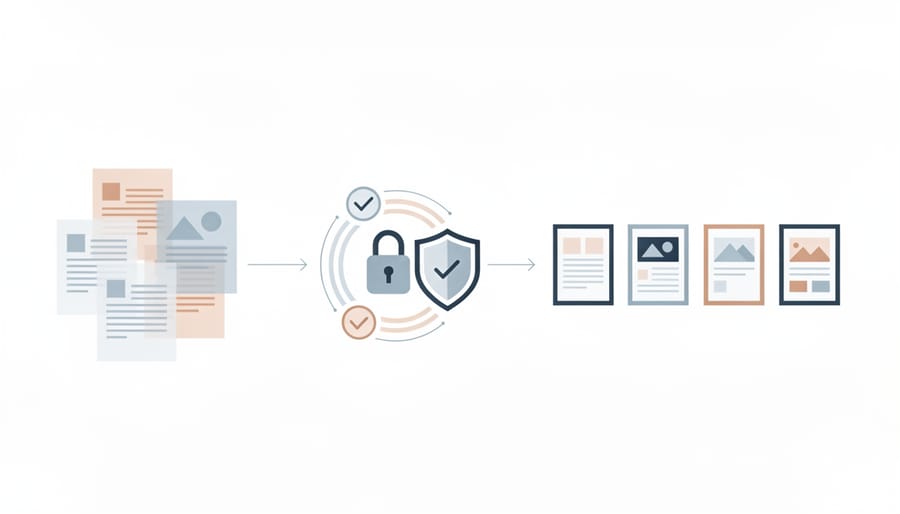
Before you publish a single customer photo or testimonial, you need airtight legal and ethical guardrails. Using customer content without proper permissions isn’t just risky, it’s a liability that can trigger lawsuits, regulatory penalties, and permanent damage to the trust you’re trying to build.
Start with explicit consent. Every piece of customer content you use requires clear, verifiable permission from the creator. A simple like or share doesn’t constitute consent, you need written agreement that specifies how you’ll use their content, where it will appear, and for how long. Create a standardized permission form that covers commercial use across all channels, including future platforms. Store these permissions in a centralized system with timestamps and documentation trails.
Privacy compliance extends beyond permission forms. Under GDPR, customers have the right to withdraw consent at any time, requiring you to remove their content immediately. CCPA mandates transparency about how you collect and use personal information. Build withdrawal mechanisms into your workflow from day one. Tag content in your systems with the contributor’s contact information and permission status so you can honor removal requests within the required timeframes.
Content authenticity verification protects both parties. Before featuring customer content, verify that the person submitting it actually created it and has the right to grant permission. Check for stolen content from other sources using reverse image searches. Confirm identities for high-value content or campaigns with significant reach. This step prevents you from inadvertently publishing plagiarized material that could land you in legal trouble.
Ethical considerations go beyond legal minimums. Be transparent about how you’ll use customer content, don’t repurpose a product review photo in a paid advertisement without telling the customer. Respect context and intent. A customer sharing their experience in a support group shouldn’t see their vulnerable moment turned into marketing fodder. When in doubt, ask again and explain the specific use case. Building ethical practices into your process protects customers, preserves authenticity, and establishes your brand as trustworthy.
Step-by-Step Process for Leveraging Customer Content
Step 1: Define Your Content Strategy and Goals
Start with the why before diving into tactics. Ask yourself: what specific business outcome should customer content drive? Increased product awareness among millennials? Higher conversion rates from consideration to purchase? Stronger retention among existing customers? Pin down one primary goal and up to two secondary objectives. Vague aims like “boost engagement” won’t guide decisions when you’re choosing between video testimonials and product photos.
Next, map your audience segments. Don’t treat all customers as a monolith. A B2B software company might segment by role (end users versus decision-makers) and company size, while a consumer brand could divide by purchase frequency and product category affinity. Each segment creates different content and responds to different triggers.
Then specify which content formats align with your goals and audience behavior. If your target segment lives on Instagram, prioritize visual content over long-form reviews. Match format to platform habits and consumption patterns.
Finally, establish concrete KPIs. Track engagement rate (likes, shares, comments per post), conversion lift from pages featuring customer content versus standard pages, submission volume, and sentiment scores. Set baseline measurements now so you can prove impact later.
Step 2: Create Collection Mechanisms
Create multiple touchpoints that make contributing content frictionless for customers. Start with a branded hashtag campaign, choose something memorable, unique to your brand, and short enough to type easily. Launch it across all social channels simultaneously with clear instructions on what you’re looking for.
Set up a dedicated submission portal on your website. Keep the form simple: name, email, content upload, and permission checkbox. The fewer fields, the higher your completion rate. Link to this portal in your email signature, checkout confirmations, and customer service interactions.
Implement social listening tools like Mention or Brandwatch to catch untagged content. Customers often post about brands without explicit tagging, and these organic mentions are goldmines for authentic material.
Design an incentive structure that feels rewarding without becoming transactional. Monthly feature spotlights, small discounts, or early access to new products work better than cash payments, which can undermine authenticity. Make recognition the primary reward, people crave acknowledgment more than compensation.
Embed calls-to-action in your email nurture sequences, post-purchase follow-ups, and customer milestone communications. Ask satisfied customers to share their experience when enthusiasm is highest, typically within 48 hours of a positive interaction.
Step 3: Secure Permissions and Rights
Securing proper permissions protects both your brand and your customers while establishing the legal foundation for content usage. Start by creating a standardized permission request template that clearly explains how you plan to use the content, where it will appear, and for how long. Be specific about platforms, social media, website, print materials, paid advertising, rather than requesting blanket “all uses” rights.
Develop a simple digital consent form that captures the customer’s name, contact information, and explicit agreement. Include checkboxes for different usage types so customers can opt in selectively. Store these permissions in a centralized database linked to each content asset, making verification instant when legal questions arise.
For ongoing campaigns, implement automated permission requests triggered when you identify valuable content. Send personalized messages thanking customers for their posts and requesting formal permission with a single-click approval process. Always provide an easy opt-out mechanism and honor withdrawal requests immediately by removing content from all channels within 48 hours.
Step 4: Curate and Verify Content
Effective curation separates amateur campaigns from professional programs. Start by establishing clear quality thresholds: Is the image resolution sufficient for your intended use? Does the content accurately represent your product or service? Review each submission against your brand guidelines, tone, visual aesthetics, messaging consistency, rejecting anything that creates misalignment, even if it’s positive.
Authenticity verification is non-negotiable. Cross-reference usernames across platforms to confirm genuine customers rather than fake accounts or competitor plants. Check posting patterns; authentic users have diverse content histories, while fabricated accounts often show suspicious uniformity. For high-value content you’ll feature prominently, consider direct outreach to verify the person’s identity and experience.
Flag content containing misinformation, inappropriate language, competitor products, or anything that violates community standards. Create a simple scoring rubric, quality, authenticity, brand fit, engagement potential, and route borderline submissions to senior reviewers. Document your curation decisions; this creates consistency across team members and provides legal protection if questions arise later about why certain content was accepted or rejected.

Step 5: Integrate Content Across Channels
Once you’ve curated and secured rights to customer content, deployment strategy becomes critical. Effective integration means placing the right content in the right channel with proper context, not simply broadcasting everywhere.
Start with a channel-specific deployment framework:
- Website integration: Feature customer photos and testimonials on product pages at decision points, embed video reviews near CTAs, and create dedicated gallery sections that showcase real use cases
- Social media amplification: Repost customer content to your brand channels with clear attribution tags, create Stories highlighting customer experiences, and use customer videos as native content rather than ads
- Email campaigns: Incorporate authentic customer photos in promotional emails, feature customer success stories in newsletters, and segment audiences to show relevant peer examples
- Paid advertising: Use customer-generated visuals in display and social ads with explicit permission, A/B test customer content against brand-created assets, and include “Real customer” disclaimers
- Physical touchpoints: Display customer photos in retail environments, feature testimonials on packaging inserts, and create in-store screens showing community content
Attribution matters for legal protection and relationship building. Always credit customers by name or handle unless they’ve requested anonymity. Tag their social profiles when reposting, include photo credits on your website, and consider creating a “Featured Community Member” recognition program. This transforms one-time contributors into ongoing advocates who actively promote their featured status, multiplying your reach organically.
Step 6: Engage and Amplify Contributors
Featuring customer content is just the beginning, meaningful recognition transforms one-time contributors into brand advocates. Respond personally to every featured customer within 24 hours, whether through direct message, comment, or email. Thank them by name and explain specifically why their content resonated with your audience.
Amplify contributors by sharing their content across multiple channels, not just where you first discovered it. If a customer posts on Instagram, feature it in your newsletter and mention it in community forums. Tag contributors (with permission) to boost their visibility and let their networks see the recognition.
Create a contributor spotlight program that celebrates your most engaged customers monthly. Offer exclusive perks like early product access, branded swag, or invitations to virtual events. These gestures cost little but signal genuine appreciation.
Build feedback loops by asking featured contributors what they’d like to see next and how you can better showcase their work. This ongoing dialogue sustains participation and yields insights into what motivates your community.
Step 7: Monitor and Optimize Performance
Track meaningful signals, not vanity metrics. Focus on engagement rate (comments, shares, saves divided by reach), conversion lift attributed to customer content, and sentiment trends in responses. Compare performance across content types: do video testimonials drive more clicks than photo reviews? Which formats spark conversations versus passive scrolling?
Set a monthly review cadence. Pull data from your analytics dashboard and look for patterns. If Instagram Stories featuring customer content consistently outperform static posts, shift resources accordingly. When certain product categories generate higher-quality submissions, prioritize those in your collection campaigns.
Use A/B testing to refine placement and presentation. Test customer content against brand-created assets in email campaigns or product pages, measure which drives better click-through and conversion rates. Document what works and what doesn’t.
Watch for declining engagement or quality drift. If participation drops, revisit your incentive structure or submission process. When content quality slips, tighten curation standards. The best programs evolve based on real performance data, not assumptions. Adjust quarterly objectives as you learn what resonates with your specific audience.
Verification: How to Measure Success
Success measurement starts with four interconnected metric categories that reveal whether customer content drives meaningful results. Track engagement depth, not just volume: time spent with customer-created content versus brand content, comment quality, shares that extend beyond your immediate audience, and save rates that signal lasting value.
Conversion lift provides direct business validation. Compare conversion rates for product pages featuring customer content against those without it, measuring both immediate purchases and downstream actions like email signups or wishlist additions. Most brands see 15-30% conversion improvements when authentic customer content appears at decision points, but your baseline matters more than industry averages.
Sentiment analysis reveals brand perception shifts that precede behavioral changes. Use social listening tools to track sentiment trends around customer content versus standard marketing messages. Improving sentiment scores month-over-month indicate your strategy resonates, while declining sentiment suggests content selection or authenticity issues need attention.
Reach amplification measures how customer content extends your brand presence. Calculate earned media value by tracking impressions generated through customer shares, features on third-party platforms, and mentions in contexts you didn’t orchestrate. Customer content that aligns with Google ranking factors often generates organic search visibility beyond paid efforts.
Benchmark against your own historical performance rather than industry standards. Establish baseline metrics before implementing customer content, then track quarterly changes. If engagement rates haven’t improved after three months or conversion lift remains flat, revisit your curation criteria, channel integration strategy, or contributor recognition approach. Connect these insights to broader 2026 SEO priorities and integrate them into your regular SEO measurement cadence to understand full-funnel impact.

Common Challenges and Solutions
Low participation rates often stem from unclear value propositions or friction in the submission process. Simplify your submission mechanism to a single-click upload or direct social media tag, and communicate specific benefits, whether that’s featuring on your website, receiving exclusive discounts, or entering prize drawings. Test different calls-to-action across channels to identify which messages resonate best with your audience segments. If participation remains sluggish after 4-6 weeks, consider launching a targeted campaign highlighting existing contributors as success stories.
Quality concerns require setting clear submission guidelines upfront rather than filtering extensively afterward. Create a simple content brief that outlines technical specs, brand values to reflect, and what successful examples look like. Implement a tiered curation system where exceptional content receives premium placement, good content appears in secondary spots, and off-brand submissions receive polite declination with specific feedback. This approach maintains standards while respecting contributor effort.
Rights management complexity becomes manageable with automated systems and templates. Deploy click-through permission forms integrated directly into submission portals, ensuring customers explicitly grant usage rights before uploading. Use standardized licensing agreements reviewed by legal counsel that clearly specify how, where, and for how long you can use content. Digital rights management platforms can track permissions at scale and flag expiring licenses before content needs renewal.
Content moderation demands both technological and human oversight. Set up automated filters to catch obvious violations while reserving final judgment for trained moderators who understand brand context and nuance. Establish a clear moderation policy that defines acceptable content boundaries, addresses potentially controversial submissions, and provides appeal processes. Balance speed with thoroughness, aim for 24-48 hour review cycles, because timely acknowledgment keeps contributors engaged. Remember that authentic customer content, even when imperfect, often drives stronger engagement than polished brand materials because it reflects genuine experiences and aligns with what Google rewards in authenticity signals.
Emerging Trends in Customer Content Marketing
The landscape of customer content marketing is shifting rapidly as technologies mature and consumer expectations evolve. AI-powered curation tools now analyze sentiment, visual quality, and brand alignment at scale, allowing marketers to identify high-performing customer content within minutes rather than hours. These systems learn from engagement patterns to predict which submissions will resonate most with specific audience segments, streamlining the selection process while maintaining authenticity. However, automation introduces new responsibility: algorithms can inadvertently amplify biased content or overlook diverse perspectives if not properly calibrated.
Video has decisively overtaken static images as the dominant customer content format in 2026. Short-form testimonials, unboxing experiences, and behind-the-scenes glimpses create emotional connection that text and photos struggle to match. Platforms prioritize video in their algorithms, extending the reach of customer-created clips far beyond traditional posts. Smart brands are providing simple filming guidelines and lightweight editing tools that help customers produce quality videos without professional equipment or skills.
Micro-communities built around specific product lines, use cases, or customer segments are replacing broad social followings as engagement engines. These smaller, focused groups generate higher participation rates and more authentic content because members share genuine common interests. Privacy regulations continue tightening globally, with new frameworks requiring explicit, granular consent for content reuse. Forward-thinking marketers are building consent management directly into their collection systems rather than retrofitting compliance, treating transparency as a competitive advantage that builds trust rather than viewing it as a legal hurdle to clear.
Frequently Asked Questions
Do I need explicit permission to use customer posts from social media?
Yes, even for public posts. Always request permission before repurposing customer content, as platform terms don’t grant you commercial usage rights. A simple DM or email with clear terms protects both parties and builds goodwill.
What’s a realistic budget for starting a customer content program?
You can start with zero budget using free social listening tools and manual curation, though most brands allocate $500-$2,000 monthly for management platforms, incentives, and content rights. Scale investment as you prove ROI through engagement metrics.
How long before I see meaningful results from customer content efforts?
Expect 60-90 days to build momentum. Initial submissions may trickle in slowly, but engagement typically accelerates once customers see their peers featured and understand your program. Early wins often come from your most loyal customers.
Should I offer incentives for customers to submit content?
Incentives work but require balance. Small rewards like discounts or feature recognition encourage participation without compromising authenticity, while large payments can make content feel transactional. Test what resonates with your audience’s motivations.
Which platform should I prioritize for collecting customer content?
Start where your customers already congregate and create. Instagram and TikTok dominate visual content, LinkedIn works for B2B testimonials, and email works universally. Review your existing engagement data to identify your strongest channel.
What if customers submit low-quality or off-brand content?
Curation is essential. Establish clear submission guidelines upfront, provide examples of desired content, and don’t feel obligated to feature everything. Politely declining unsuitable submissions while thanking contributors maintains standards without discouraging participation.
These questions surface repeatedly because customer content programs require both technical execution and human judgment. The permission question stems from brands getting burned by assumed rights, while budget concerns reflect the fear that authenticity requires expensive infrastructure. Timeline anxiety is universal, marketers need early proof of concept before securing ongoing resources.
Platform choice paralysis often stalls programs before they start. Rather than spreading thin across every channel, dominate one where your customers naturally share. A jewelry brand might win on Instagram with unboxing photos, while a SaaS company could build a library of LinkedIn case study videos. Match your collection strategy to customer behavior, not marketing trends.
The quality dilemma requires a mindset shift. Not every customer photo needs professional polish. Sometimes a grainy smartphone shot of your product in real use carries more weight than a staged studio image. Set a quality floor that maintains brand integrity but allows authentic moments to shine through imperfections.
Customer content isn’t just a tactic, it’s a fundamental shift in how brands build trust and community. When you treat customers as collaborators rather than passive audiences, you create marketing that resonates because it’s rooted in real experiences and authentic voices.
The seven-step process we’ve covered, from defining your strategy to monitoring performance, provides a roadmap, but the real work happens when you implement it with intention. Start small: identify one channel where your customers are already creating content, secure proper permissions, and test how that content performs across your platforms. Learn what resonates with your audience, refine your approach, and optimize engagement based on real data rather than assumptions.
The brands that succeed with customer content in 2026 share a common trait: they respect their contributors. They secure permissions properly, credit sources transparently, and curate content that genuinely reflects their community’s diversity. This ethical foundation isn’t just good practice, it’s what sustains long-term participation.
Your customers have stories worth sharing. Your role is creating the systems and spaces that bring those stories forward, then amplifying them in ways that honor both the contributor and your brand. When done right, customer content transforms marketing from monologue into conversation, building connections that outlast any single campaign.