
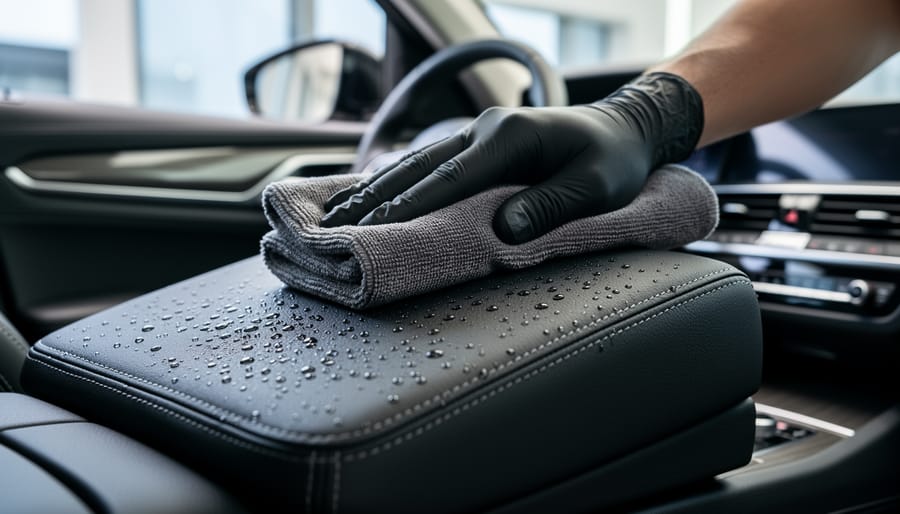
Selling Premium Car Care Online: What a Leather Ceramic Coating Adds to a Detailer’s Pitch
Leather ceramic coating is a nano-polymer treatment applied to automotive leather surfaces that creates a hydrophobic, UV-resistant barrier while preserving the material’s natural texture and breathability. For detailing professionals navigating the premium service market in 2026, this product represents both a significant revenue opportunity and a marketing challenge: convincing customers to invest in protection for surfaces they already perceive as durable.
The digital pitch for leather ceramic coating demands a fundamentally different approach than traditional in-person upselling. Online buyers can’t feel the treated surface or witness the water-beading demonstration that typically closes sales on the shop floor. Instead, successful online positioning relies on strategic content that bridges the technical benefits with emotional value propositions: protecting a luxury investment, maintaining resale value, and extending the lifespan of premium interiors.
This tension between scientific innovation and accessible marketing creates real obstacles for detailers expanding into e-commerce or service booking platforms. Many professionals default to specs-heavy descriptions that alienate casual car owners, while others oversimplify to the point of seeming gimmicky. The ethical middle ground requires understanding both the actual chemistry at work and the precise language that builds trust without overpromising results that vary based on leather type, application quality, and maintenance habits.
What Leather Ceramic Coating Means for Car Care
Leather ceramic coating is a silicon dioxide-based polymer that bonds with automotive leather at a microscopic level, fundamentally changing how the material resists damage. Unlike traditional leather conditioners that moisturize the surface or waxes that create a temporary shine, this technology forms a semi-permanent chemical bond with the leather fibers themselves, creating a protective barrier that stands up to UV rays, spills, body oils, and daily wear.
Ceramic Coating
A liquid polymer that chemically bonds with a surface to create a layer of protection, typically based on silicon dioxide (SiO2) compounds originally developed for industrial and aerospace applications.
Nano-Technology Protection
Protective treatments that work at the molecular level, with particles measured in nanometers that can penetrate microscopic surface irregularities to create comprehensive coverage.
SiO2 Polymer
Silicon dioxide-based chemical compounds that form the active ingredient in most ceramic coatings, valued for their hardness, clarity, and resistance to environmental damage.
Hydrophobic Barrier
A water-repelling surface treatment that causes liquids to bead up and roll off rather than absorbing into the material, protecting against stains and moisture damage.
The practical difference matters for both detailers and their customers. Traditional leather care products need frequent reapplication because they sit on top of the leather and gradually wear away or absorb into the material. A ceramic coating for leather penetrates the surface structure and cures into a durable shield that typically lasts one to three years. This longevity transforms leather protection from a recurring maintenance task into a long-term investment, which changes how detailers can position and price interior care services in their online offerings.
How Leather Ceramic Coating Works
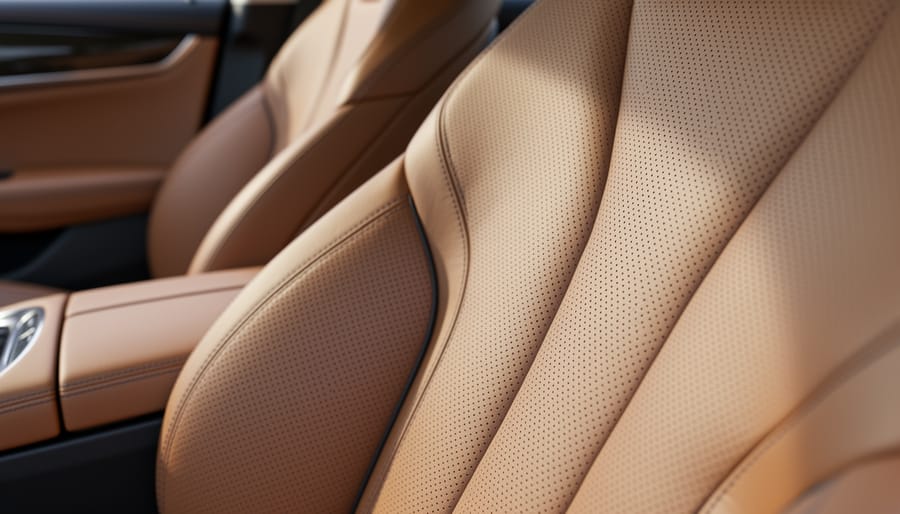
The chemical bonding process begins with thorough surface preparation. Professional detailers clean the leather with a pH-neutral solution that removes oils, dirt, and any previous conditioner residue. This step is critical because ceramic coating bonds at the molecular level, and contaminants prevent proper adhesion. Once the leather is clean and completely dry, the coating application can begin.
Silicon dioxide nano-particles in the coating formula penetrate the leather’s natural pores rather than simply sitting on top. These microscopic particles, typically measuring 20-100 nanometers, bond chemically with the leather’s structure as the coating cures. The result is a protective layer that becomes part of the leather itself rather than a separate film resting on the surface.
This bonding mechanism differs fundamentally from traditional film-based protectants like vinyl coatings or thick sealants. Film protectants create a barrier layer that can crack, peel, or trap moisture beneath the surface, potentially damaging the leather over time. Ceramic coating maintains the leather’s natural breathability while repelling liquids and contaminants. Water beads on the surface instead of soaking in, and UV rays are deflected before they can cause fading or cracking.
The curing timeline varies by product formulation and environmental conditions. Most professional-grade leather ceramic coatings reach initial cure within 24 hours but continue hardening for 7-10 days. During this period, the coating achieves its full chemical bond and maximum durability. Advise clients to avoid heavy use and moisture exposure during the first week.
Once fully cured, quality leather ceramic coatings typically last one to three years depending on wear patterns, UV exposure, and maintenance practices. High-contact areas like driver’s seat bolsters may show earlier wear than less-touched surfaces.
Components of a Leather Ceramic Coating System
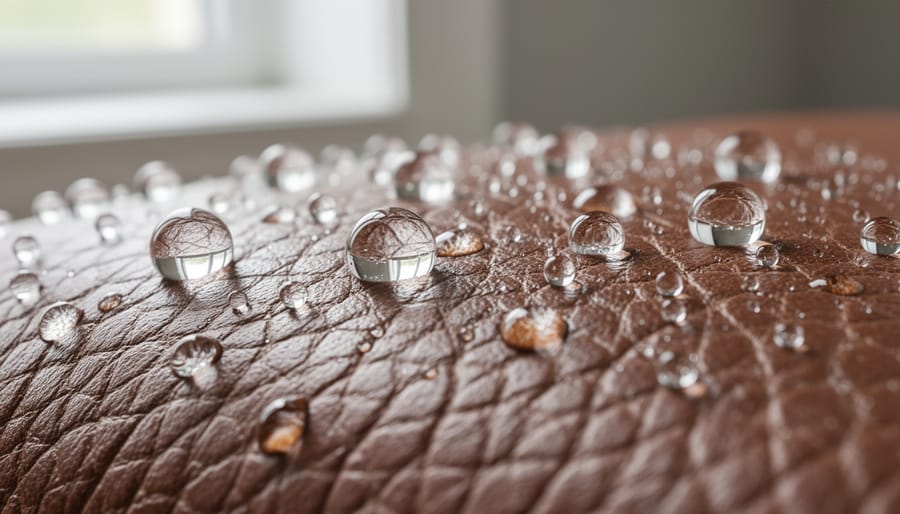
Professional leather ceramic coating systems for automotive applications consist of multiple components that work together to deliver lasting protection. Understanding what’s included helps detailers communicate the comprehensive nature of these products and justify premium pricing to clients.
A complete leather ceramic coating kit typically contains:
- Silicon dioxide (SiO2) coating solution, the primary protective formula that bonds to leather surfaces
- pH-balanced leather cleaner, removes oils, dirt, and residues without damaging the leather before coating application
- Microfiber applicators, specialized pads designed for even, streak-free coating distribution
- Maintenance spray, a topper that refreshes the coating’s properties between applications
- Warranty documentation, certificates or guarantees that substantiate durability claims
The coating formula itself is where premium brands differentiate most significantly. Higher-end products feature greater SiO2 concentration, often 70-90% compared to 30-50% in entry-level options. This concentration directly affects longevity, with premium formulas delivering three years of protection versus twelve to eighteen months for standard versions.
Ingredient quality matters beyond concentration alone. Top-tier manufacturers use pharmaceutical-grade silicon dioxide with smaller nano-particles that penetrate leather pores more effectively. They also incorporate UV inhibitors, anti-static agents, and hydrophobic compounds that enhance protection against specific threats like sunlight degradation and liquid staining.
Prep cleaners in professional systems are leather-specific, maintaining the material’s natural pH balance while stripping away silicone-based conditioners that would prevent coating adhesion. This technical precision separates professional-grade products from consumer alternatives and supports the higher price points detailers charge for expert application.
How Detailers Use Leather Coating in Service Packages
Premium Package Integration
High-end detailing packages naturally anchor around complete vehicle transformation, and leather ceramic coating fits this narrative when bundled with complementary services. Successful detailers position these offerings at $800-$1,500+ by combining interior leather protection with paint correction, exterior ceramic coating, and thorough decontamination, creating a comprehensive shield that justifies premium pricing.
The key is presenting leather coating not as an isolated add-on but as integral to whole-vehicle protection. When a customer invests in multi-stage paint correction and a five-year exterior ceramic coating, protecting the interior leather with matching technology creates logical consistency. This bundling strategy works particularly well for new vehicle prep packages, where buyers want immediate, complete protection, and luxury vehicle maintenance programs where clients expect professional-grade care.
Effective pricing structures tier the packages clearly: a base detail without coatings, a mid-tier with exterior protection only, and the premium tier featuring both exterior and interior ceramic treatments. This framework lets customers self-select while the premium option appears as the complete solution rather than an upsell.
Maintenance and Recurring Revenue
Leather ceramic coating maintenance creates predictable revenue streams that extend far beyond the initial application. Most coatings perform optimally for 12-18 months before requiring a refresh treatment, a natural touchpoint for re-engagement.
Smart detailers design tiered maintenance programs: a basic annual inspection and light reapplication ($150-$250), or a comprehensive refresh that includes deep cleaning and full recoating ($400-$600). These services take less time than the original application since the foundation is already established.
Subscription models work particularly well for this service. Monthly or quarterly maintenance product deliveries, pH-balanced leather cleaners, coating boosters, keep your brand top-of-mind between professional services. Pair these with reminder emails at the 12-month mark, ideally with visual comparisons from the original application photos.
The key is setting expectations during the initial sale: position the coating as a protection system requiring periodic care, not a permanent solution. This honesty builds trust while establishing the service relationship as ongoing rather than transactional. Customers who invest $800 in initial coating rarely hesitate at $200 annual maintenance to preserve that investment.
The Digital Marketing Advantage of Offering Leather Coating
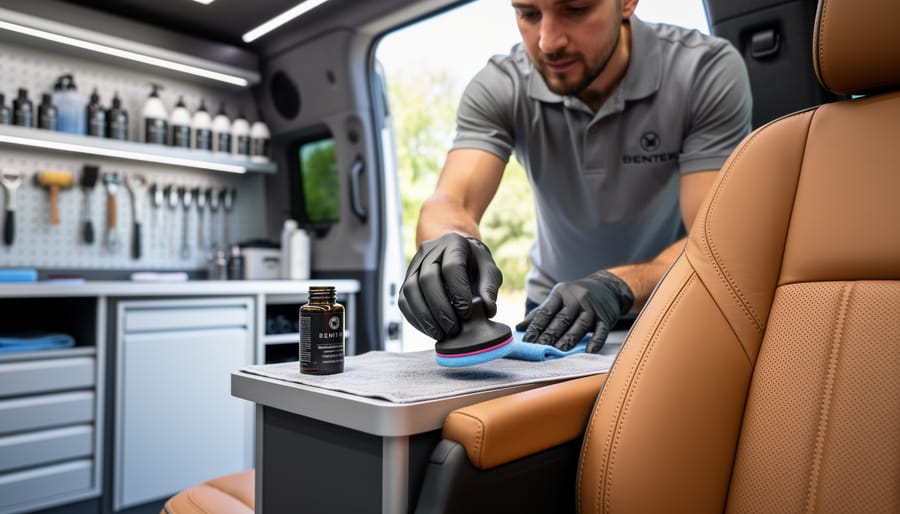
Leather ceramic coating delivers immediate digital marketing advantages that transcend the service itself. Adding this premium offering creates natural opportunities for compelling visual content that resonates across platforms: time-lapse application videos, water-beading demonstrations showing protection in action, and dramatic before/after transformations of aged leather interiors. These visual assets outperform generic detailing photos because they demonstrate measurable, visible protection, content that stops scrollers and converts browsers into inquiries.
From an SEO perspective, offering leather coating positions your detailing business for high-intent, high-value search queries. Vehicle owners searching for “luxury car interior protection” or “premium leather treatment” represent a different customer segment than those seeking basic washes. These searches indicate purchase readiness and budget flexibility, exactly the audience premium services need. Optimizing your site for these terms aligns with ranking factors in 2026 that reward specialized expertise and service depth, not just generic keyword volume. Partnering with real SEO services can help identify these conversion-focused keyword opportunities within your local market.
The service also elevates your brand perception in the competitive detailing market. Offering advanced nano-technology treatments signals that you’re current with industry innovations, not stuck providing the same services competitors have offered for decades. This perception shift matters when potential customers compare options online. When satisfied clients share results on their own social channels, you can leverage customer content as authentic testimonials that carry more weight than any paid advertisement.
Premium product offerings naturally attract premium customers. Tesla, Porsche, and Mercedes owners searching for comprehensive vehicle protection represent an audience segment with higher lifetime values and referral potential. They expect cutting-edge care for their investment, and leather ceramic coating positions your business as the provider who understands both the vehicle and the owner’s expectations.
Crafting the Online Pitch: Marketing Leather Coating to Clients
Your online pitch for leather ceramic coating should lead with the problem it solves, not the product itself. Start website copy with a relatable scenario: “Leather seats fade, crack, and stain over time, even with regular cleaning.” Then introduce the coating as engineered protection that extends their investment’s lifespan. This positions the service as prevention rather than luxury add-on.
Be transparent about durability. If your product lasts 1-2 years under normal conditions, say exactly that. Avoid ambiguous claims like “long-lasting protection” that set unrealistic expectations. Specify what “normal conditions” means: daily commute versus weekend recreational vehicle. This honesty builds trust and prevents disappointed reviews.
Address cost objections directly in your copy. Create a simple value comparison showing that a $300-500 coating application every two years costs less than repairing or replacing damaged leather interiors, which can run $1,000-3,000 per seat. Frame it as proactive investment, not expense.
For social media, demonstrate results visually. Post short videos showing water beading off treated leather or side-by-side aging comparisons between coated and uncoated surfaces. Caption these with specific benefits: “UV protection that prevents color fade in Arizona’s intense sun” speaks to local concerns better than generic claims.
Email sequences should educate progressively. Send new leads a three-part series: first explaining what the coating does, second showing application process transparency, third addressing seasonal timing (apply before summer UV exposure or winter moisture challenges). Each email should answer one question completely rather than overwhelming recipients.
When prospects compare your service to $15 leather conditioners, acknowledge the difference plainly: conditioners moisturize but don’t create a protective barrier. The coating does both while actively repelling contaminants conditioners can’t block. You’re not dismissing their current routine; you’re showing what the next level accomplishes.
Common Questions About Leather Ceramic Coating
How long does leather ceramic coating actually last?
Professional-grade leather ceramic coatings typically provide protection for one to three years depending on usage, wear patterns, and maintenance. Frequent entry and exit from high-contact areas like driver seats will show wear sooner than rear seats or luxury vehicle interiors with lighter use.
Does ceramic coating work on perforated leather seats?
Yes, but application requires careful technique to avoid clogging the perforations. The coating should be applied in thin layers with proper buffing to ensure ventilation holes remain clear while still providing protection to the leather surface.
Can customers apply leather ceramic coating themselves?
While consumer-grade products exist, professional application ensures proper surface preparation, even coverage, and optimal bonding. DIY attempts often result in streaking, missed spots, or inadequate prep that compromises durability, which is why detailers should emphasize their expertise when discussing this service through customer service on social platforms or consultation calls.
What maintenance does coated leather need?
Coated leather requires only periodic cleaning with pH-neutral cleaners and soft microfiber towels. Unlike traditional conditioners that need monthly application, ceramic-coated leather stays protected without constant product reapplication, though some manufacturers offer maintenance boosters to extend longevity.
These questions surface repeatedly in detailer consultations and customer inquiries. Addressing them proactively in your digital content, website FAQs, and sales conversations builds trust while demonstrating technical knowledge. When customers understand what they’re paying for and what results to expect, they’re more likely to view leather ceramic coating as a worthwhile investment rather than an unnecessary upsell.
Leather ceramic coating sits at the intersection of product innovation and smart business positioning for detailers navigating the 2026 digital marketplace. The nano-technology itself delivers genuine protection that traditional leather treatments cannot match, giving professionals a defensible premium offering backed by chemistry rather than marketing spin. What separates successful detailers online is not just offering this service, but explaining it honestly. Customers researching comprehensive vehicle protection expect transparency about what coating actually does, how long it lasts, and why it costs more than conventional conditioners. Educational content that demonstrates expertise, realistic before-and-after documentation, and clear service descriptions build the trust that converts browsers into clients willing to invest in complete interior protection. For detailing businesses, leather coating is not merely another upsell. It is proof of staying current with automotive care technology, a visual storytelling tool that elevates your digital presence, and a foundation for recurring revenue through maintenance programs. Those who market it as part of a holistic vehicle protection philosophy, rather than overselling miracles, position themselves as the professionals customers return to when quality matters.