

Digital Marketing Trends 2026 News Update: What Changed and What to Watch in 2026
The biggest shift in digital marketing for 2026 is that AI now sits inside nearly every stage of the customer journey, while the places customers…
The biggest shift in digital marketing for 2026 is that AI now sits inside nearly every stage of the customer journey, while the places customers actually find you keep multiplying. Search is no longer just Google. People discover brands through AI assistants, social feeds, marketplaces and chat interfaces, and AI tools are spotting patterns, predicting behaviour and adjusting campaigns in real time.
That’s the opportunity. Here’s the pressure. Average digital agency revenue growth reached 7.5% in 2025, up from 5% in 2024, yet still about half the roughly 13% average of 2015 to 2020. Growth is back, but it’s harder won.
Regulation is catching up too. New York has become the first U.S. state to require advertisers to disclose AI-generated humans in ads, with the rule taking effect in June 2026. Treat it as an early signal, not a one-off.
Below, we break down the four developments shaping the year, why they matter, and how to respond without trading trust for speed.
What Changed: Search Is No Longer Just a Google Story
Picture a shopper who asks a chat assistant for a recommendation, gets a short answer naming a brand, and goes straight to that brand’s site. No search results page, no list of blue links. That small moment captures the biggest change in 2026.
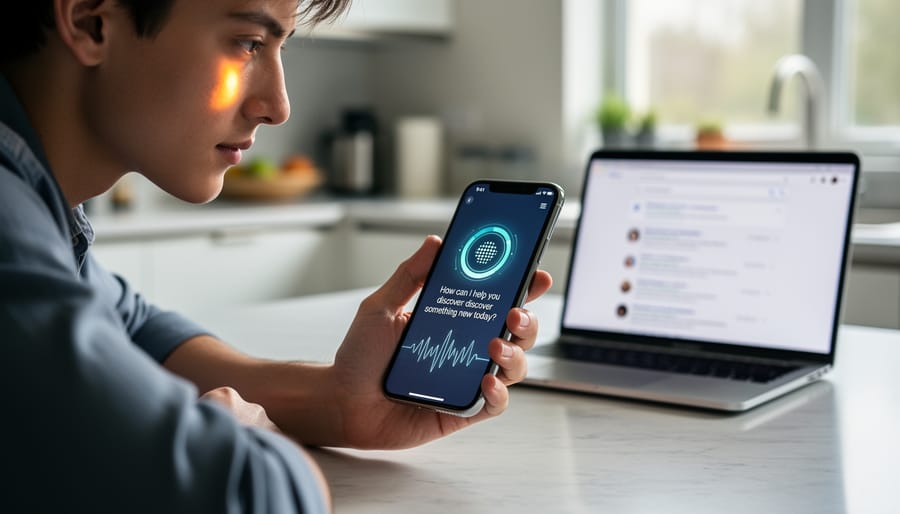
Search is no longer just about Google. Discovery now happens through AI assistants, social feeds, marketplaces and chat interfaces, often in the same afternoon and sometimes in the same purchase. At the same time, AI is embedded into almost every stage of the customer journey, from first awareness through to the final decision. Tools now spot patterns, predict behaviour and adjust campaigns in real time.
For agencies, this changes how channels get planned. A single-engine strategy leaves gaps, because audiences meet brands in places where a classic search ranking never shows up. That doesn’t make search less important, and it’s still worth understanding the ranking factors 2026 that shape traditional visibility. It just means visibility now has to travel further, with content that is clear, trustworthy and easy to surface wherever people ask their questions.
We haven’t confirmed specific platform changes or budget forecasts here, so treat any firm claims about those with caution until you’ve checked official sources.
Key Developments Shaping Digital Marketing in 2026
1. AI Is Now Embedded Across the Customer Journey

In 2026, AI sits inside almost every stage of the customer journey, from the first moment someone discovers a brand to the follow-up after a purchase. The tools aren’t just automating tasks anymore. They’re identifying patterns in how people behave, predicting what they’re likely to do next, and adjusting campaigns in real time.
Here’s a simple example. Say a campaign’s headline is getting plenty of views but few clicks with one audience group. Instead of waiting for a weekly report, the system can shift budget toward a better-performing version, or tweak the targeting, while the campaign is still running. What once took days of manual review now happens in hours or minutes.
That speed is useful, but it doesn’t replace judgment. Someone still needs to check whether the system is optimising for the right goal, whether the audience signals make sense, and whether the messaging stays honest and respectful. Responsible use means setting clear guardrails, reviewing what the tools recommend, and keeping a person accountable for the final call. The agencies that do this well treat AI as a capable assistant, not an autopilot.
2. Discovery Fragments Across Assistants, Feeds, Marketplaces and Chat
Search used to mean typing a query into Google and scanning ten blue links. In 2026, that picture is incomplete. Discovery now runs through AI assistants, social feeds, marketplaces and chat interfaces, and people move between them without much thought.
For content teams, that raises a practical question: where could your brand show up? A realistic starting list looks like this:
- AI assistants that summarize answers instead of listing pages
- Social feeds where people stumble onto products and ideas
- Marketplaces where shoppers compare options directly
- Chat interfaces where questions get conversational replies
- Traditional search, which still matters but no longer stands alone
The common thread is content that holds up wherever it lands. Clear structure, plain language and honest claims make a page easier for both people and automated systems to understand and reuse. A well-organized answer to one specific question travels better than a keyword-stuffed page built for a single channel.
Trust matters just as much. When your content is surfaced out of context, accuracy and transparency are doing the talking for you. I’d rather not guess at how any one platform ranks or selects content, since that detail isn’t confirmed. Building useful, verifiable material is the safer bet across all of them.
3. New York Moves First on AI-Generated Humans in Ads
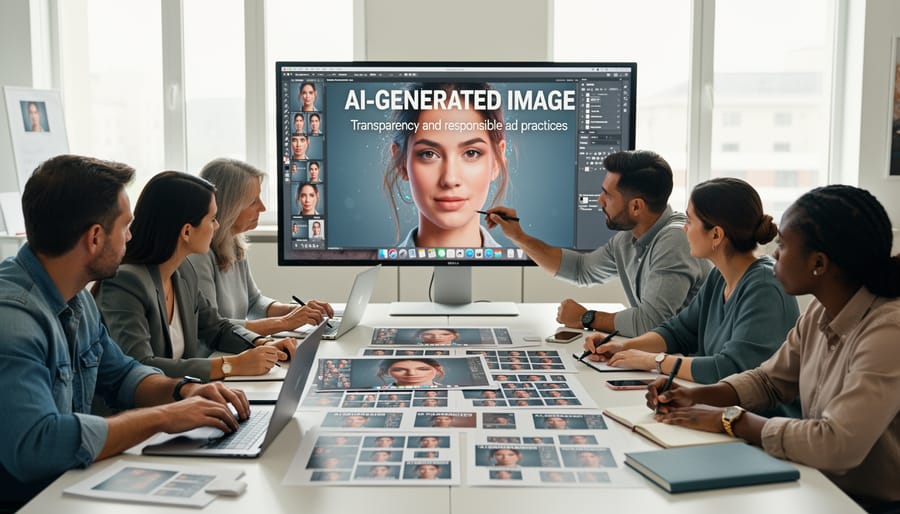
New York has become the first U.S. state to require advertisers to disclose AI-generated humans in ads, and the requirement takes effect in June 2026. You can read the details in the first-in-nation NY AI disclosure law announcement.
For creative teams, the practical question is simple: does a synthetic person appear anywhere in your ad? If it does, that fact now needs a clear place in your production checklist, alongside usage rights and brand approvals. Agencies will likely want to track which assets contain AI-generated humans from the first concept review, not at the final sign-off stage.
The ethical case is just as strong as the compliance one. Audiences extend trust to ads based on who they think is speaking to them. A made-up face presented as a real customer or spokesperson quietly erodes that trust, and disclosure is the honest fix.
Teams that build transparency into their workflow now will be better placed when the rule takes effect, and better placed with clients who care about promoting responsibly.
4. Agency Growth Recovers, but Remains Below Historic Norms
The headline number is encouraging, but the context matters. Average digital agency revenue growth reached 7.5% in 2025, a clear step up from 5% in 2024. Yet that recovery still sits at roughly half the pace agencies enjoyed in the not-so-distant past.
Here are the figures side by side:
- 2024 average revenue growth: 5%.
- 2025 average revenue growth: 7.5%.
- 2015 to 2020 average growth: roughly 13%.
So how should we read this? Carefully. Growth is moving in the right direction, but the sector has not returned to its earlier momentum. For anyone tracking Digital Agency Trends, that suggests a market in recovery rather than a market back to normal.
It also helps to resist the urge to project forward. These numbers describe what already happened, and none of them tells us what 2026 will deliver. Treat them as a baseline for conversations about pricing, services and positioning, not as a forecast.
One practical takeaway: slower growth tends to reward agencies that sharpen their offer and earn client trust, rather than those chasing volume. That is where the ethical, transparent practices discussed above can quietly do their work.
Why It Matters for Agencies and Marketing Teams
Taken together, these shifts change how agencies work, not just what they report. When discovery spreads across assistants, feeds, marketplaces and chat, a single-channel plan stops making sense. Services get organised around being found and trusted in several places at once, and regular SEO reviews become a way to check that content holds up beyond one search engine.
AI-driven optimization shifts creative workflows too. Tools that adjust campaigns in real time shorten the gap between idea and result, so creative teams and analysts need tighter feedback loops. Someone still has to decide what a campaign should say and whether an automated change fits the brand.
Disclosure rules add a third layer. With New York requiring AI-generated humans in ads to be disclosed from June 2026, client conversations now include questions about how creative is produced and labelled. Agencies that raise those questions early look prepared rather than reactive. For teams running programmes in several markets, the same discipline applies to CRM across borders where consistent, honest messaging is harder to maintain.
Ethical promotion is becoming a competitive advantage. Transparency matters most in regulated or sensitive niches, such as wellness, where audiences make decisions about their health and money and are quick to lose trust. Clear labelling and honest claims protect clients as much as they protect audiences.
What to Watch Next
Nobody can say how the rest of 2026 will play out, so the smartest move is to track a few signals rather than chase predictions. Platform changes, budgets and forecasts weren’t confirmed in our research, so check those against current official sources before you act on them.
Here’s what deserves a spot on your radar:
- Whether other states follow New York on AI disclosure rules for ads.
- How audiences move between AI assistants, social feeds, marketplaces and chat to find brands.
- How measurement keeps up when discovery spreads across many surfaces.
- How agency service models adapt as growth stays below historic norms.
Start with disclosure. New York’s rule takes effect in June 2026, and it’s reasonable to ask whether it sets a pattern. We haven’t confirmed any plans elsewhere, so treat that as a question to monitor, not a forecast.
Measurement is the quieter challenge. When a shopper might meet your brand in a chat answer before ever clicking a link, old attribution habits can miss the story. Pay attention to how you evaluate customer content and other assets that travel across surfaces.
Finally, watch agency growth. After 7.5% in 2025, the next data points will show whether the recovery holds.
Frequently Asked Questions About 2026 Digital Marketing Trends
What is changing about search in 2026?
Search is no longer just about Google. Discovery now happens through AI assistants, social feeds, marketplaces and chat interfaces.
How widely is AI used across the customer journey?
AI in marketing is expected to be embedded into almost every stage of the customer journey in 2026. Tools are already identifying patterns, predicting behaviour and adjusting campaigns in real time.
What does New York’s new advertising rule require, and when does it start?
New York became the first U.S. state to require advertisers to disclose AI-generated humans in ads. The requirement goes into effect in June 2026.
How does agency growth compare with earlier years?
Average digital agency revenue growth was 7.5% in 2025, up from 5% in 2024. That is still about half the roughly 13% average seen from 2015 to 2020.
These answers stick to what the research confirmed. Platform changes, budgets and forecasts remain unverified, so check them against current official sources before acting.
Taken together, the 2026 picture is clearer than the noise around it suggests. Discovery now spreads across AI assistants, social feeds, marketplaces and chat interfaces, so a brand’s visibility depends on being useful wherever people ask. AI sits inside nearly every stage of the customer journey, spotting patterns and adjusting campaigns in real time. And New York’s requirement to disclose AI-generated humans in ads, effective June 2026, signals that transparency is becoming part of the job.
These shifts all point to the same conclusion for Digital Agency Trends: growth has recovered modestly, but it won’t come from doing the same things faster. It will come from agencies that pair smart automation with clear, honest creative.
The practical takeaway is simple. Use AI to sharpen judgment, not replace it. Tell audiences what’s real and what isn’t. Trust, once earned, is the one channel that works everywhere.
If you want to keep tracking how these changes unfold, keep following Digital Genie resources for grounded, ethics-minded updates.