

What Is Technology in Marketing (and How Does It Work)?
Technology in marketing is the use of software, data, and automated systems to plan, deliver, and measure how a business reaches its audience.
Technology in marketing is the use of software, data, and automated systems to plan, deliver, and measure how a business reaches its audience. That covers everything from the analytics dashboard tracking campaign performance to the platform deciding which ad a person sees next. It’s the machinery behind modern marketing, and it now shapes nearly every decision a team makes.
Why does it matter? Because the gap between teams that use it well and teams that don’t shows up in results. Better targeting means less wasted spend. Automation frees people from repetitive tasks so they can focus on strategy and creative work. Measurement tools replace guesswork with evidence about what’s actually working.
But power brings responsibility. The same tools that personalize a message can also cross lines around privacy, consent, and honest promotion, especially in specialized or regulated markets where rules are tighter and audiences are more sensitive. Ethical use isn’t a footnote here. It’s part of doing the job properly.
This guide explains how marketing technology works, breaks down its main categories, and shows how it’s applied across digital marketing and social media, so you can see the whole picture in plain language and apply it with confidence.
What Technology in Marketing Means in Plain Terms
Picture a small team that runs its marketing out of spreadsheets. One sheet holds email contacts, another tracks social posts, and a third logs ad spend. Every Monday someone copies numbers between them, and nobody is quite sure which campaign actually brought in the last customer. The work gets done, but much of it is guesswork.
Now imagine the same team after connecting those pieces. Contacts flow into one place, emails send themselves when someone signs up, and a single dashboard shows what is working. That shift is technology in marketing at its most practical.
It helps to separate a single tool from a stack. A tool does one job, like sending emails or scheduling posts. A marketing technology stack is a group of tools that share data, so what happens in one place informs the others. A newsletter platform that only sends messages is a tool. A newsletter platform that knows which pages a subscriber visited, and adjusts what it sends next, is part of a stack.
Done well, this solves four everyday problems:
– Reaching the right audience instead of broadcasting to everyone.
– Personalizing messages so they match what each person cares about.
– Measuring results clearly enough to see what deserves more budget.
– Reducing manual work like copying data and sending routine follow-ups.
None of this requires deep technical skill. It starts with knowing which problem you want to solve and choosing tools that talk to one another.
How Marketing Technology Works Behind the Scenes
From Data Collection to Action
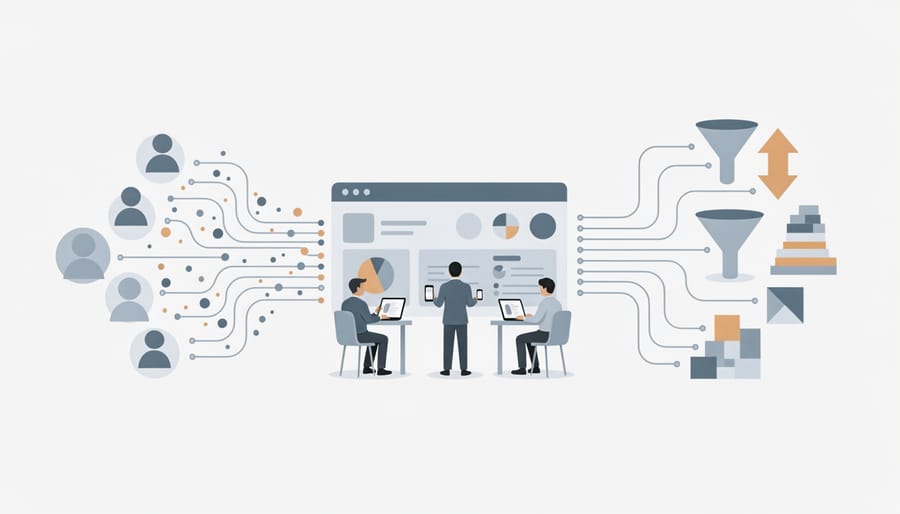
Every marketing tool starts with the same raw material: signals from real people. A website records which pages someone views. A social platform shows which posts get a reaction. An email tool tracks opens and clicks. A support chat or a purchase adds the most direct signal of all, a customer telling you what they actually want.
On their own, those signals sit in separate systems and tell a partial story. The real value comes when a platform, often a customer data platform or CRM, stitches them into one profile per person. That unified view is what lets a marketer ask a useful question, such as who browsed a product twice but never bought, and then act on it.
The flow usually runs like this:
- Collect: Gather signals from sites, social, email, and customer interactions.
- Unify: Merge those signals into a single customer profile.
- Segment: Group people by behavior, interest, or stage.
- Activate: Trigger the right message through the right channel.
- Measure: Track what happened after the message went out.
- Refine: Adjust audiences and messages based on the results.
Consent sits underneath every stage. As third-party cookies fade and privacy rules tighten, marketers lean more on first-party data: information people share directly, like an email signup, a preference center choice, or a purchase history. It’s more reliable because the customer knowingly gave it, and it builds trust instead of eroding it. Teams that ask clearly, explain the value of sharing, and honor opt-outs end up with cleaner data and warmer audiences than those chasing hidden tracking.
Where Automation and AI Fit In
Automation is the quiet workhorse of marketing technology. It takes rules a marketer sets once and carries them out at scale: scheduling social posts for the right time zone, sending a welcome email the moment someone subscribes, or nudging a shopper who left items in a cart. These are triggered actions, meaning a specific behavior sets off a pre-planned response. The value is consistency and time saved. A team no longer has to send every message by hand, and customers get timely, relevant follow-ups instead of silence.
Machine learning goes a step further by finding patterns in data that people would struggle to spot. It can estimate which leads are most likely to convert, suggest the best send time for different segments, or flag which version of a headline is likely to perform better. Think of it as prediction and optimization: the system learns from past results and adjusts what it recommends.
Generative AI adds a drafting layer. It can produce first-pass subject lines, ad variations, or outlines in seconds, which helps teams get past the blank page. But a draft is only a starting point. Generated copy can sound generic, miss a brand’s personality, or state things that aren’t accurate.
That is where people stay essential. Humans decide the strategy, set the guardrails, review the output, and protect the brand voice that makes a business recognizable. The most effective teams treat automation and AI as capable assistants that handle the repetitive and analytical heavy lifting, while judgment, creativity, and accountability remain firmly human.
The Main Types of Marketing Technology

Marketing technology isn’t one product. It’s a set of categories, each handling a different part of the job, and most teams end up using several at once. Knowing what each category does makes it much easier to decide what you actually need and how the pieces should connect.
Here are the core categories, in plain terms:
- Customer relationship management (CRM)
- A system that stores every contact, conversation, and purchase in one place. A sales rep uses it to see that a lead opened three emails before asking for a call.
- Marketing automation
- Software that sends messages and runs workflows based on rules and behavior. A welcome email series that starts the moment someone subscribes is a classic example.
- Analytics and attribution
- Tools that measure what people do and which channels deserve credit for results. They answer questions like whether a sale started with a social post or a newsletter.
- Customer data platform (CDP)
- A system that unifies first-party data from websites, apps, and email into a single customer profile. It lets a team build one audience segment that works across every channel.
- Advertising platforms
- Self-serve systems for buying and optimizing paid placements on search, social, and display networks. A marketer sets a budget and audience, then adjusts based on results.
- AI-assisted content tools
- Software that helps draft, edit, and adapt copy or visuals at speed. A writer might use one to produce headline options, then refine the best one by hand.
Two more categories round out most stacks. Content management systems let teams publish and organize pages, blog posts, and landing pages without writing code. Social media management tools handle scheduling, monitoring, and community replies from a single dashboard, which saves hours of switching between apps.
The real value shows up when these categories talk to each other. A CRM that feeds a CDP, which in turn powers an automation workflow and an analytics report, gives a team a closed loop from first touch to final result. Disconnected tools create duplicate records and conflicting numbers. Connected ones create clarity.
That connection matters even more as a business grows into new regions. Differences in language, data rules, and customer habits can quietly break a setup that worked at home, which is why a sound CRM strategy across borders starts with how your data is structured, not just which software you buy.
Start with the category that solves your most pressing problem, whether that’s messy contact data, slow publishing, or fuzzy reporting. Add others as the need becomes clear, and make sure each new tool has a plan for sharing data with the rest.
How Technology Is Used Across Digital Marketing and Social Media
Everyday Applications That Drive Results
Most marketing teams touch technology daily, often without thinking of it as “technology.” The same few applications show up again and again because they remove friction between a goal and the work needed to reach it.
Segmentation and personalization let a team group people by behavior, interests, or purchase history and send each group something relevant instead of one message for everyone. Automation handles the repetitive parts: welcome emails, abandoned-cart reminders, and follow-ups that fire when someone takes a specific action. On social, scheduling tools keep a steady publishing rhythm, while listening tools surface what audiences say about a brand or category. Performance dashboards pull results from several channels into one view, so decisions rest on evidence rather than gut feel.
Here is how these uses typically map to marketing goals:
- Audience segmentation and social listening support awareness by showing who to reach and what they care about.
- Social scheduling and community tools support engagement by keeping conversations consistent and timely.
- Personalized on-site experiences and triggered emails support conversion by meeting people with the right offer at the right moment.
- Lifecycle automation and loyalty messaging support retention by keeping existing customers informed and valued.
Technology also makes it easier to build on what your audience already creates. Teams that track and organize reviews, posts, and mentions can strengthen customer content engagement without starting from a blank page each time. The pattern holds across all of these: tools take over the routine work, and people keep the judgment calls.
Using Technology Responsibly in Niche and Regulated Markets

Industries like cannabis and wellness operate under tighter advertising rules because their products touch health, safety, and age restrictions. Major ad platforms often limit or ban promotion outright, which leaves marketers with fewer paid options and a bigger need for care. That shifts the work toward channels a business actually controls.
Technology helps here, if it’s used with restraint. Consent management tools record when and how someone agreed to hear from you, so every email or text rests on a clear opt-in. Owned channels such as email and SMS let you reach people directly, without relying on a platform’s shifting policies. Segmentation features can keep messages away from audiences who shouldn’t see them, including anyone under the legal age. Regular SEO reviews also help teams find compliant, organic ways to be discovered when paid reach is limited.
Ethical promotion matters as much as the tools. Be transparent about who you are and what you’re offering. Make honest claims, and avoid promising health outcomes you can’t support. Target age-appropriate audiences, and collect only the data you genuinely need.
Respecting privacy is more than a legal box to tick. In sensitive categories, trust is hard to win and easy to lose, so the most effective strategy is often the most open one: tell people clearly how their information is used, and let them walk away whenever they choose.
Questions Marketers Commonly Ask About Marketing Technology
What is a marketing technology stack?
A marketing technology stack is the group of connected tools a team uses to plan, run, and measure its work, such as an email platform, a customer database, analytics software, and social scheduling tools. What makes it a stack rather than a pile of apps is that the pieces share data. When they talk to each other, you spend less time copying numbers between systems.
Do small businesses need marketing technology?
Most do, but not a sprawling setup. A small team can get a lot done with a few well-chosen tools for email, analytics, and social posting, then add more only when a real bottleneck appears. Start with the problem you want to solve, not the tool everyone else is buying.
How is marketing technology different from advertising technology?
Marketing technology covers the whole customer relationship, including owned channels like email, your website, and your CRM. Advertising technology is narrower and focuses on buying, placing, and measuring paid ads. The two overlap, and many teams use both, but ad tech is really one branch of the larger marketing tree.
Does AI replace marketers?
Not in any way that matters for strategy. AI is good at drafting, sorting data, and spotting patterns, but it doesn’t understand your brand’s promises or your customers’ trust. Marketers who treat it as a fast assistant, with a human checking the output, tend to get the best of both.
How can teams adopt new tools without sacrificing customer trust? Be upfront about what data you collect and why, and make consent easy to give and easy to withdraw. Pilot a tool on a small scale before rolling it out, and ask whether a feature would feel helpful or invasive if the customer could see exactly how it worked. Trust is slow to build and quick to lose, so it’s worth moving a little more carefully than the technology allows. Keeping an eye on broader digital marketing trends can also help you spot privacy shifts early, before they force a rushed change.
Technology in marketing, at its core, is the set of tools and systems that help teams plan, run, and measure their work with less guesswork. The real value of Technological Innovations in Marketing comes from pairing those tools with clear goals and ethical practice. A well-connected stack serves a purpose you’ve defined, and respects the people on the other end of every message.
A practical first step is an audit. List the tools you already use, note what data each one collects, and ask whether you have consent for it and whether anyone actually acts on it. You’ll often find overlap, gaps, and a few unused subscriptions along the way.
From there, keep an eye on where the field is heading: privacy-first measurement that relies less on third-party tracking, and AI-assisted workflows that take on routine tasks while people steer strategy and voice. The tools will keep changing. Trust, clarity, and honest communication are what carry a marketing program through those changes.